
Coordination complex
Central metal ion bonded to surrounding ligands via coordinate bonds.

Erikvjohnstone · CC BY-SA 4.0
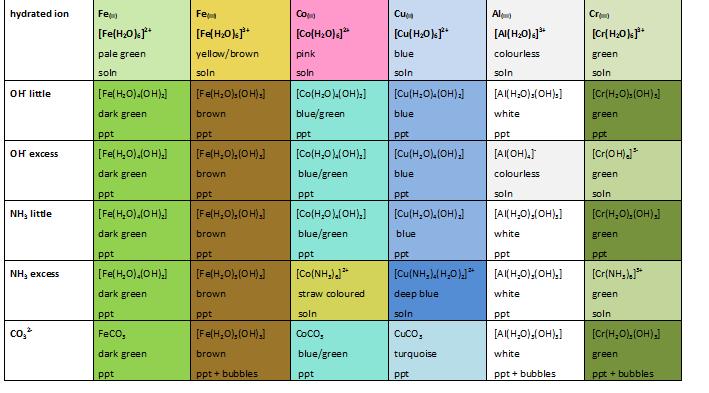
A coordination complex is a chemical compound built around a central atom or ion, typically a metal, known as the coordination centre. This centre is surrounded by a group of bound molecules or ions called ligands (or complexing agents). Many metal-based compounds, particularly those containing transition metals—elements like titanium found in the d-block of the periodic table—are coordination complexes. The atom within a ligand that directly bonds to the central metal is the donor atom. In a typical complex, a metal ion bonds to several donor atoms, which may be identical or different. A ligand that bonds to the central atom through multiple of its own atoms is called polydentate; ligands forming two, three, four, or even six bonds are common. These are known as chelate complexes, and their formation is called chelation, complexation, or coordination. The central atom or ion together with all its ligands forms the coordination sphere; the central atom and the donor atoms make up the first coordination sphere. The bonds between ligands and the central atom are coordinate covalent bonds (or dipolar bonds). Originally, the term "complex" meant a reversible association of atoms, molecules, or ions through weak bonds, but in coordination chemistry this meaning has shifted. Some metal complexes form virtually irreversibly, and many are held together by quite strong bonds. The number of donor atoms attached to the central atom or ion is the coordination number; the most common values are 2, 4, and especially 6. A hydrated ion is a type of complex ion—a species formed between a central metal ion and one or more surrounding ligands that each have at least one lone pair of electrons. If all ligands are monodentate, the number of donor atoms equals the number of ligands. For example, the cobalt(II) hexahydrate ion [Co(H₂O)₆]²⁺ has six water molecules attached to a cobalt ion. The oxidation state and coordination number reflect the number of bonds between the metal and its ligands. However, the coordination number of Pt(en)₂²⁺ is 4, not 2, because it has two bidentate ligands that together provide four donor atoms. Any donor atom gives a pair of electrons; some donor atoms or groups can offer more than one pair. These are called bidentate (two pairs) or polydentate (more than two pairs). In some cases, an atom or group shares a pair of electrons between two similar
- field
- Coordination chemistry
- known_for
- Central atom or ion bonded to surrounding ligands via coordinate covalent bonds; coordination numbers and geometries; chelate complexes; Werner's coordination theory
Lore & Background
Coordination complexes have been known since the beginning of modern chemistry. Early well-known coordination complexes include dyes such as Prussian blue. Blomstrand developed what has come to be known as the complex ion chain theory, proposing that ligands like ammonia could link together in chains through nitrogen atoms, rather than directly bonding to the metal. Danish scientist Sophus Mads Jørgensen supported and extended Blomstrand's chain theory, while the alternative idea of direct bonding to the metal was later proposed by Alfred Werner.
Reader's Guide
Coordination complexes are pervasive in chemistry, with their structures and reactions described in many ways. The central atom or ion, together with all ligands, comprise the coordination sphere. The number of donor atoms attached to the central atom or ion is called the coordination number, with the most common being 2, 4, and especially 6. Ligands are classified as L or X depending on how many electrons they provide for the bond between ligand and central atom. The geometry of a complex is first described by its coordination number, with most structures following a points-on-a-sphere pattern leading to regular geometries such as linear, trigonal planar, tetrahedral, square planar, trigonal bipyramidal, octahedral, and others. The chemistry of transition metal complexes is typically dominated by interactions between s and p molecular orbitals of the donor-atoms in the ligands and the d orbitals of the metal ions. The maximum coordination number for a certain metal is related to the electronic configuration of the metal ion and the ratio of the size of the ligands and the metal ion. Large metals and small ligands lead to high coordination numbers, while small metals with large ligands lead to low coordination numbers.
Did You Know?
- The atom within a ligand that is bonded to the central metal atom or ion is called the donor atom.
- A polydentate ligand is a molecule or ion that bonds to the central atom through several of the ligand's atoms; ligands with 2, 3, 4 or even 6 bonds to the central atom are common.
- The coordination number of Pt(en)22+ is 4 (rather than 2) since it has two bidentate ligands, which contain four donor atoms in total.
Pioneers and Historical Foundations
The origins of surface science trace back to remarkable individuals who broke barriers and laid the groundwork for the discipline. Agnes Pockels, despite being repeatedly denied entry to academic laboratories, pioneered the investigation of surface tension and devised what became known as the Pockels slide trough, which later served as the basis for the Langmuir-Blodgett trough. Around the same era, Paul Sabatier advanced the understanding of heterogeneous catalysis through his work on hydrogenation, while Fritz Haber developed the industrial process that bears his name. Irving Langmuir emerged as another founding figure, and the leading journal in this discipline carries his name. His adsorption equation remains a cornerstone for modeling monolayer adsorption under the assumption that all surface sites share identical affinity and do not interact with one another. Gerhard Ertl made a landmark contribution in 1974 by describing hydrogen adsorption on palladium using low-energy electron diffraction, a technique that opened the door to similar investigations on platinum, nickel, and iron surfaces. His later work examining carbon monoxide interacting with platinum earned him the 2007 Nobel Prize in Chemistry, cementing the field's maturity.
Catalysis at the Atomic Scale
Surface chemistry, broadly defined as the investigation of chemical reactions occurring at phase boundaries, holds particular significance for heterogeneous catalysis. When gas or liquid molecules adhere to a surface, the process is termed adsorption, which may proceed through chemisorption or physisorption. The strength of this molecular attachment to a catalytic surface is critical to performance, a concept captured by the Sabatier principle. Because real catalyst particles possess complex, irregular structures that resist straightforward study, researchers often turn to well-defined single-crystal surfaces of active metals like platinum as model systems. Multi-component arrangements allow scientists to examine how catalytically active metal particles interact with supporting oxide materials, typically by growing ultra-thin films or particles on a single-crystal substrate. Ultra-high vacuum techniques—adsorption experiments, temperature-programmed desorption, scanning tunneling microscopy, low-energy electron diffraction, and Auger electron spectroscopy—reveal the relationships among composition, structure, and reactivity. These findings feed into chemical models or guide the rational design of improved catalysts, while the atomic-scale precision of the measurements clarifies reaction mechanisms that bulk methods cannot resolve.
Electrochemistry and Geochemistry at the Interface
Beyond catalysis, surface science illuminates two other critical domains. In electrochemistry, processes are driven by an applied potential across a solid–liquid or liquid–liquid boundary. The behavior at an electrode–electrolyte interface is shaped by the distribution of ions in the adjacent liquid phase, forming what is called the electrical double layer. By studying adsorption and desorption events on atomically flat single-crystal surfaces as a function of applied potential, time, and solution conditions—using spectroscopy, scanning probe microscopy, and surface X-ray scattering—researchers can connect traditional electrochemical measurements like cyclic voltammetry to direct, real-time observations of interfacial processes. In geochemistry, the interfaces between minerals and their surrounding environment govern phenomena such as iron cycling and soil contamination. In situ synchrotron X-ray techniques, including X-ray reflectivity, X-ray standing waves, and X-ray absorption spectroscopy, along with scanning probe microscopy, reveal the atomic-scale structure and chemical properties of mineral–solution boundaries. For instance, examining how heavy metals or actinides adsorb onto mineral surfaces provides molecular-level detail that enables more accurate predictions of contaminant migration through soils and disruptions to natural dissolution–precipitation cycles.
Surface Physics and Modern Analytical Methods
Surface physics, defined as the study of physical interactions at interfaces, overlaps considerably with surface chemistry but emphasizes phenomena such as friction, surface states, surface diffusion, surface reconstruction, phonons and plasmons at the boundary, epitaxy, electron emission and tunneling, spintronics, and the self-assembly of nanostructures on surfaces. The analytical toolkit for probing these processes includes surface X-ray scattering, scanning probe microscopy, surface-enhanced Raman spectroscopy, and X-ray photoelectron spectroscopy. A defining feature of modern surface analysis is its extraordinary depth sensitivity: several techniques interrogate only the topmost one to ten nanometers of a surface exposed to vacuum. Among these are angle-resolved photoemission spectroscopy, X-ray photoelectron spectroscopy, Auger electron spectroscopy, low-energy electron diffraction, electron energy loss spectroscopy, thermal desorption spectroscopy, ion scattering spectroscopy, secondary ion mass spectrometry, and dual-polarization interferometry. Many of these methods depend on vacuum conditions because they rely on detecting electrons or ions emitted from or scattered by the surface, making them uniquely suited to resolving the atomic and electronic structure of the outermost layers without interference from bulk material.
Gallery

Frequently Asked Questions
What is a Coordination complex?
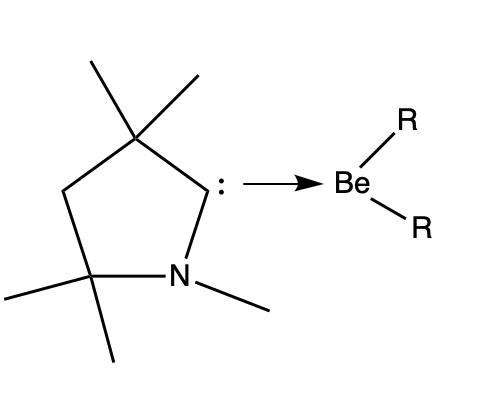
A coordination complex is a molecular structure in which a central metal atom or ion sits at the core while multiple smaller molecules or ions, called ligands, attach around it. The bonds holding these ligands in place are coordinate covalent bonds, where the ligand supplies both electrons in the shared pair.
What are Coordination complex's signature traits or 'powers'?
Its defining characteristics include a specific coordination number (how many donor atoms are attached) and a predictable geometric arrangement such as octahedral, tetrahedral, or square planar. It also features chelate rings when a single ligand wraps around the metal through two or more donor atoms, locking the structure together more tightly.
How does a Coordination complex actually form?
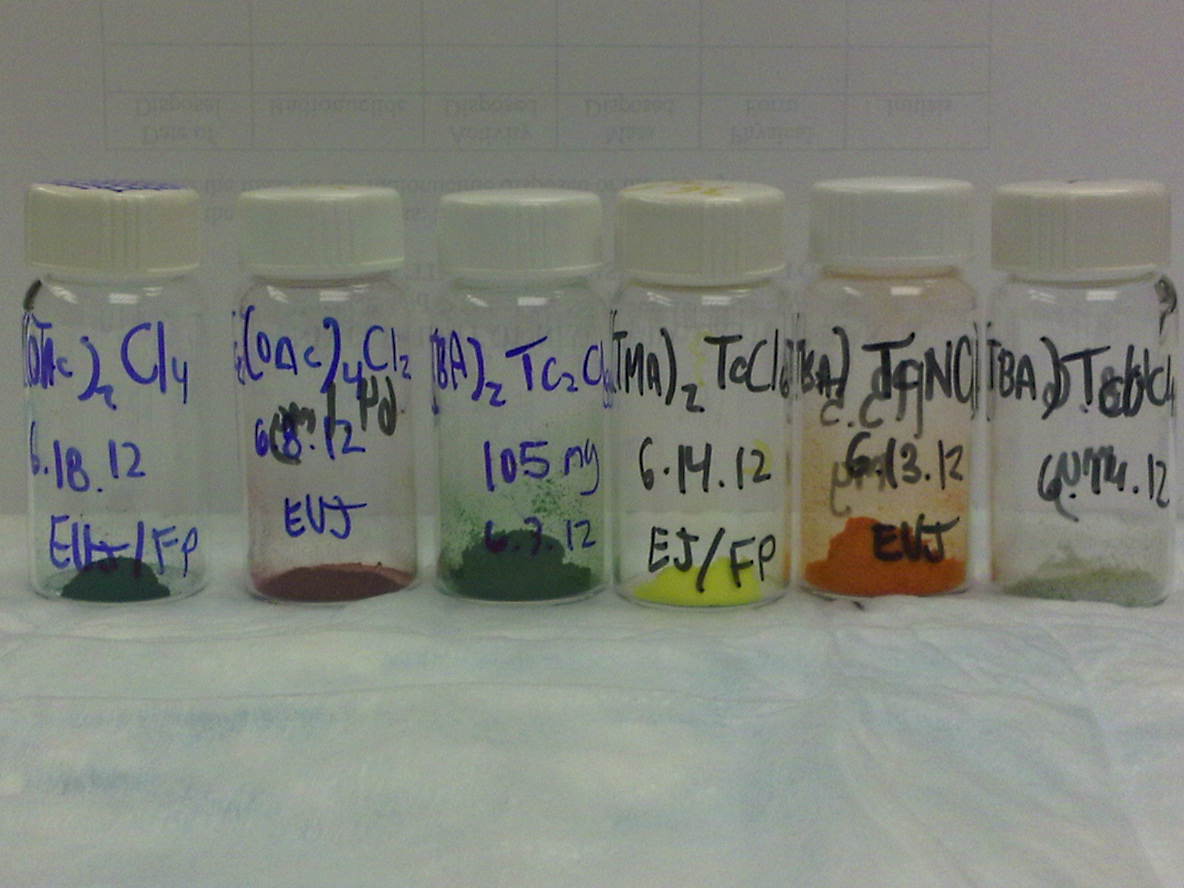
A ligand uses a donor atom—often nitrogen, oxygen, or sulfur—to donate a lone pair of electrons into an empty orbital on the central metal ion. Once several ligands complete this handshake, a stable, often colored, coordination compound results.
Why is Coordination complex so important in the field?
It explains the bonding, color, and reactivity of countless transition-metal compounds, from hemoglobin's iron center to industrial catalysts used in petrochemistry. Without the coordination-complex model, much of modern inorganic and surface chemistry would lack a unifying structural language.
More in Electrochemistry And Surface Chemistry 1-18
Spotted an error? Know more?
This is a living reference — every entry is fact-audited, and reader corrections feed straight into our audit queue. Suggest an edit · See this site's audit record