
Electrolytic cell
An electrochemical cell using external voltage to drive non-spontaneous reactions.

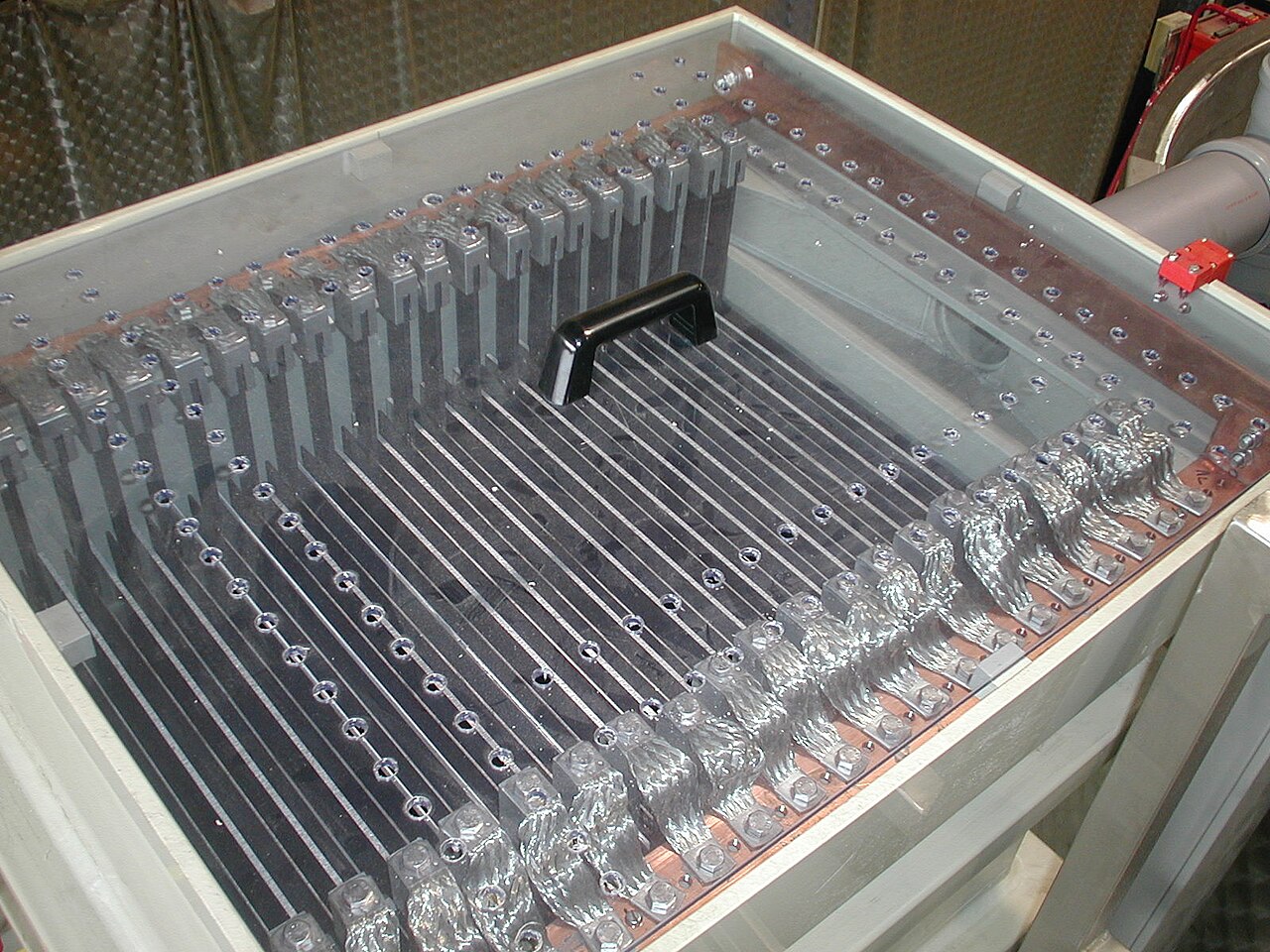
Mdemyer · CC BY-SA 4.0
An electrolytic cell is a type of electrochemical cell where an outside power source supplies electrical energy to force a chemical reaction that would not happen on its own. This process is called electrolysis. The cell has two electrodes—a positively charged anode and a negatively charged cathode—placed in an electrolyte solution. It works opposite to a galvanic cell, which creates electrical energy from a spontaneous reaction and is what batteries are based on. In an electrolytic cell, the overall reaction is non-spontaneous, meaning its Gibbs free energy is positive, while in a galvanic cell, the reaction is spontaneous with a negative Gibbs free energy. In an electrolytic cell, an external voltage pushes a current through the cell, making the non-spontaneous reaction occur. In a galvanic cell, the spontaneous reaction itself drives the current. An equilibrium electrochemical cell sits between these two states, where the tendency of the spontaneous reaction to push current is exactly matched by an opposing voltage, so no current flows. If that voltage is raised, the cell becomes electrolytic; if lowered, it becomes galvanic. An electrolytic cell has three parts: an electrolyte and two electrodes (cathode and anode). The electrolyte is often a solution of water or another solvent with dissolved ions. Molten salts, like sodium chloride, can also serve as electrolytes. When an external voltage is applied to the electrodes, ions in the electrolyte are drawn to the electrode with the opposite charge, where charge-transferring (or faradaic/redox) reactions happen. Only with the right polarity and enough voltage can the cell break down a normally stable chemical compound. The electrical energy supplied makes possible a chemical reaction that would not occur spontaneously. Michael Faraday defined the cathode as the electrode where positively charged ions (cations, like silver ions Ag⁺) flow to inside the cell, getting reduced by picking up electrons from that electrode. He defined the anode as the electrode where negatively charged ions (anions, like chloride ions Cl⁻) flow to, getting oxidized by giving up electrons to the electrode. In a galvanic cell (or battery) connected to an external wire, the cathode is positive and the anode is negative, so positive current flows from cathode to anode through the external circuit. Electrolytic cells are commonly use
- field
- Electrochemistry
- known_for
- Driving non-spontaneous chemical reactions via external voltage; used in electrolysis, electroplating, and industrial metal refining
- components
- Electrolyte, anode, cathode
- key_process
- Electrolysis
Lore & Background
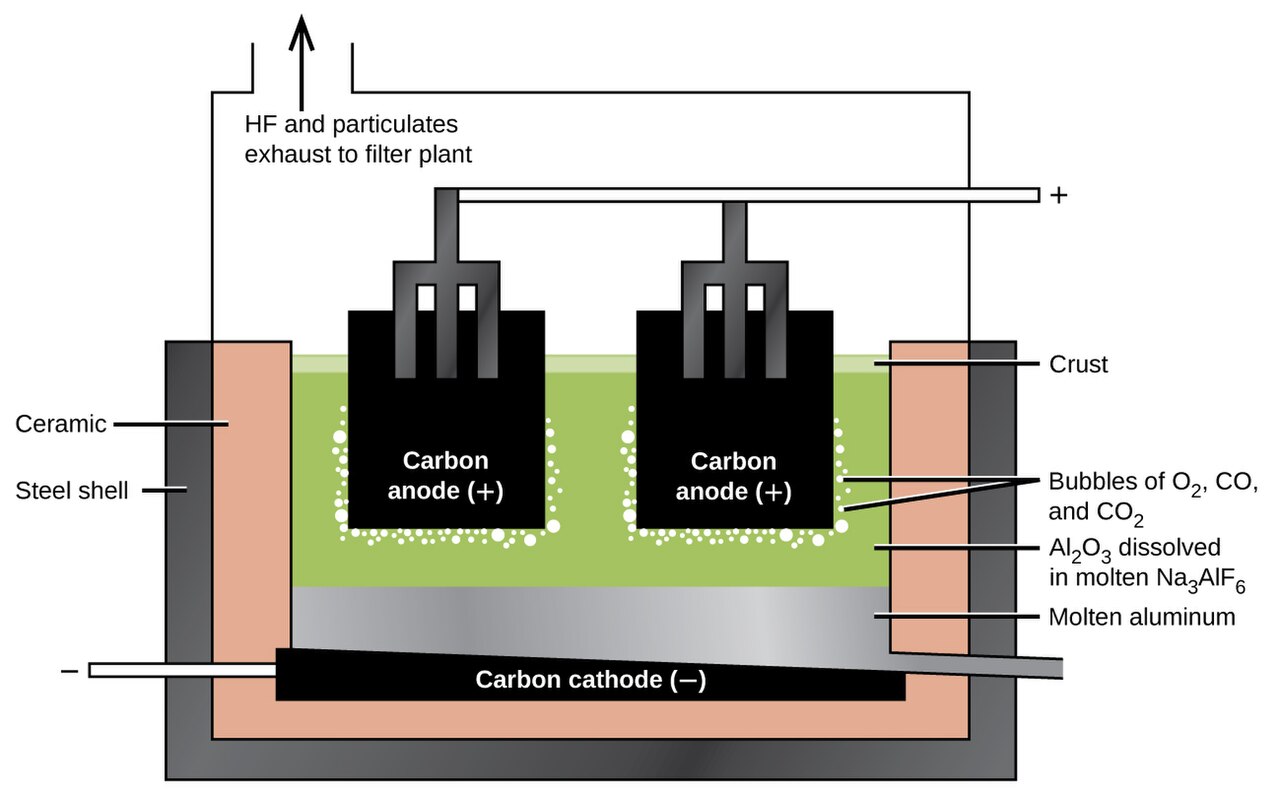
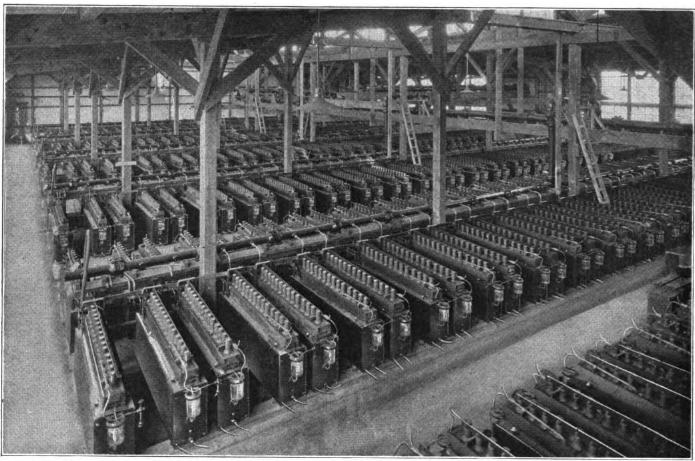
In an electrolytic cell, a voltage is applied between the two electrodes, causing a current to pass through the cell and driving a non-spontaneous chemical reaction. The electrolyte is usually a solution of water or other solvents with dissolved ions; molten salts such as sodium chloride can also function as electrolytes. Ions in the electrolyte are attracted to the electrode with the opposite charge, where faradaic (redox) reactions take place. Only with an external voltage of correct polarity and sufficient magnitude can an electrolytic cell decompose a normally stable chemical compound. Michael Faraday defined the cathode as the electrode to which cations (positively charged ions) flow within the cell to be reduced, and the anode as the electrode to which anions (negatively charged ions) flow to be oxidized. In a galvanic cell, the cathode is positive and the anode is negative in the external circuit, with positive current flowing from cathode to anode. Important applications include the decomposition of water into hydrogen and oxygen, the extraction of aluminum from bauxite, and electroplating of metals such as copper, silver, nickel, or chromium. Industrially, electrolytic cells are used in electrorefining and electrowinning of non-ferrous metals like high-purity aluminum, copper, zinc, and lead. The chloralkali process electrolyzes dissolved sodium chloride to produce chlorine gas, hydrogen gas, and sodium hydroxide.
Reader's Guide
The electrolytic cell is fundamental to industrial chemistry and materials production. By applying an external voltage, it enables non-spontaneous reactions that are essential for extracting reactive metals (e.g., aluminum from bauxite), producing chlorine and sodium hydroxide via the chloralkali process, and electroplating protective or decorative coatings. Its principle—using electrical energy to drive chemical change—underpins technologies from water splitting for hydrogen fuel to refining high-purity metals. The distinction from galvanic cells (which spontaneously generate electricity) highlights the reversible nature of electrochemical systems: an equilibrium cell exists between the two states, becoming electrolytic when voltage is increased and galvanic when decreased. This understanding, rooted in Faraday's definitions of cathode and anode, remains central to electrochemistry and its applications in energy storage, manufacturing, and chemical synthesis.
Did You Know?
- An electrolytic cell uses an external voltage to drive a non-spontaneous chemical reaction, whereas a galvanic cell produces electricity from a spontaneous reaction.
- Michael Faraday defined the cathode as the electrode to which cations flow to be reduced, and the anode as the electrode to which anions flow to be oxidized.
- Electrolytic cells are used in the chloralkali process to produce chlorine gas, hydrogen gas, and sodium hydroxide from dissolved sodium chloride.
- Water can be electrolyzed into hydrogen and oxygen gas when ions are added, such as in saltwater or acidic water.
Fundamental Principles of Electrochemical Reactions
Electrochemistry sits at the intersection of physical chemistry and electrical engineering, examining how electrical potential differences drive or result from identifiable chemical transformations. At its core, an electrochemical reaction operates on a principle fundamentally different from ordinary chemical reactions: rather than electrons hopping directly between atoms, ions, or molecules, they travel through an electronically conducting phase—most commonly an external electric circuit. The two electrodes involved are kept apart by an electrolyte that conducts ions but blocks electrons, forcing the charge carriers to take the external path. This architecture underpins both electrolysis, where an applied voltage forces a chemical change, and galvanic cells like batteries and fuel cells, where a spontaneous chemical reaction generates a voltage. The electrolyte need not always be a liquid solution; in processes such as electroless plating, the conducting phase takes a different form. When these principles are applied at the nanoscale, the field is termed nanoelectrochemistry, extending the same electron-transport logic into the realm of molecular and atomic dimensions.
The Galvani-Volta Controversy and the Birth of a Discipline
In 1791, the Italian physician Luigi Galvani published a landmark essay arguing that animal tissue harbored an innate vital force he called animal electricity, capable of activating nerves and muscles when probed with metal. He positioned this as a third category of electricity, distinct from the natural kind produced by lightning or electric eels and the artificial kind generated by friction. His fellow scientists largely embraced the idea, but Alessandro Volta pushed back, insisting the frog-leg contractions stemmed from differences in metal composition, temper, and bulk rather than any biological fluid. Galvani countered by demonstrating muscular response with two pieces of identical material. Yet Volta's skepticism proved productive: his continued experimentation with zinc's relatively weak bonding energy led him to construct the first practical battery, a device that could sustain an electrical current far longer than anything previously known. This dispute—part biology, part physics—effectively birthed electrochemistry as a discipline, establishing the crucial link between chemical change and electrical potential that would define the field for centuries.
Nineteenth-Century Breakthroughs: Electrolysis and Element Isolation
The early nineteenth century witnessed a cascade of electrochemical discoveries that transformed the field from philosophical curiosity into practical science. In 1800, William Nicholson and Johann Wilhelm Ritter used Volta's battery to split water into hydrogen and oxygen, and Ritter soon identified the electroplating process, noting that the quantity of deposited metal and evolved oxygen depended on electrode spacing. Sir Humphry Davy took electrolysis further, concluding that electricity in simple cells arose from chemical action between oppositely charged substances; this reasoning led directly to his 1808 isolation of metallic sodium and potassium from their molten salts, followed by the alkaline earth metals. Michael Faraday's 1832 experiments yielded his two quantitative laws of electrochemistry, while John Daniell's 1836 primary cell solved the polarization problem by introducing copper ions near the positive electrode and using amalgamated zinc at the other to boost voltage. Each breakthrough built on the last, converting electrochemistry into a precise, predictive science.
The Long Prehistory: From Gilbert to Coulomb
Long before electrochemistry emerged as a named discipline, centuries of electrical inquiry laid its groundwork. In the sixteenth century, English scientist William Gilbert devoted seventeen years to studying magnetism and, to a lesser degree, electricity, earning the title Father of Magnetism for his methods of producing and strengthening magnets. In 1663, Otto von Guericke built the first electric generator—a sulfur ball inside a glass globe, rotated by crank, producing static sparks when a pad was rubbed against it. By the mid-eighteenth century, Charles François de Cisternay du Fay identified two types of static electricity and proposed a two-fluid model of vitreous and resinous charges, a framework later challenged by Benjamin Franklin's one-fluid theory. In 1785, Charles-Augustin de Coulomb formulated the law of electrostatic attraction, building on Joseph Priestley's earlier observations of electrical repulsion. These incremental advances in understanding charge, force, and generation created the conceptual scaffolding upon which Galvani, Volta, and their successors would construct the science of electrochemical reactions.
Gallery

Frequently Asked Questions
What is an Electrolytic cell?
An Electrolytic cell is an electrochemical setup that draws electrical energy from an external power source and uses it to push a chemical reaction forward that would not proceed on its own. It is the engine behind electrolysis, where applied voltage splits ions in a solution into new products.
How does Electrolytic cell differ from a galvanic cell?
A galvanic cell harvests usable electricity from a spontaneous reaction (the principle behind batteries), whereas an Electrolytic cell does the opposite—it consumes outside electricity to force a non-spontaneous reaction to occur. In short, the Electrolytic cell is the electrical 'input' device, while the galvanic cell is the electrical 'output' device.
What are Electrolytic cell's core components?
The setup relies on three essential parts: a positively charged anode, a negatively charged cathode, and an electrolyte solution that shuttles ions between them. Together these pieces create the complete pathway for both electron flow and ionic conduction.
What is Electrolytic cell known for in real-world practice?
It is the workhorse behind electroplating, where a thin metal layer is deposited onto a substrate, and large-scale metal refining such as purifying aluminum or copper. Any time a compound needs to be 'unmade' or a surface coated with metal, an Electrolytic cell is doing the heavy lifting.
Why is Electrolytic cell a pivotal entry in the Electrochemistry And Surface Chemistry series?
It marks the point where the series shifts from spontaneous, energy-releasing reactions to externally driven ones, highlighting the positive Gibbs free energy threshold that separates the two regimes. Grasping this entry is essential for understanding downstream surface-chemistry applications like electrodeposition and corrosion protection.
More in Electrochemistry And Surface Chemistry 1-18
Spotted an error? Know more?
This is a living reference — every entry is fact-audited, and reader corrections feed straight into our audit queue. Suggest an edit · See this site's audit record