Corrosion
Natural process converting refined metals into stable oxides.

Engr Hafiza Maida · CC BY-SA 4.0
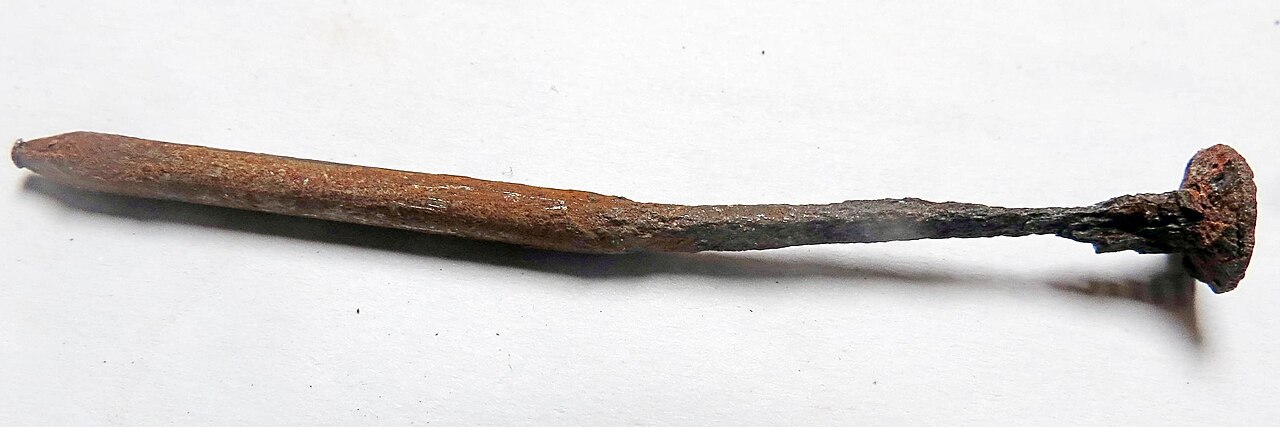
Corrosion is a natural process that converts a refined metal into a more chemically stable oxide, involving the gradual deterioration of materials, usually metals, by chemical or electrochemical reaction with their environment. Corrosion engineering is the field dedicated to controlling and preventing this process. The most common form is electrochemical oxidation, such as rusting, which produces red-orange iron oxides.
- field
- Materials science, corrosion engineering
- known_for
- Electrochemical oxidation of metals, rusting, galvanic corrosion
- key_concept
- Passivation and galvanic series
- common_example
- Rusting of iron
Lore & Background
Corrosion degrades useful properties of materials including mechanical strength, appearance, and permeability. Many structural alloys corrode from exposure to moisture, but the process can be strongly affected by certain substances. Corrosion can be localized to form pits or cracks, or extend uniformly across a surface. Because corrosion is diffusion-controlled, it occurs on exposed surfaces, and methods like passivation and chromate conversion can increase corrosion resistance.
Reader's Guide
Galvanic corrosion occurs when two different metals have electrical contact in a common electrolyte, causing the more active metal (anode) to corrode faster. The galvanic series predicts which metals are more noble or active in a given environment. Passivation involves the spontaneous formation of an ultrathin passive film that acts as a barrier to further oxidation, seen in materials like aluminum and stainless steel. However, if the passive film breaks down, pitting corrosion, crevice corrosion, or stress corrosion cracking may occur. Corrosion removal can be done chemically, such as using phosphoric acid to remove rust from ferrous tools.
Did You Know?
- Rusting is the most familiar example of electrochemical corrosion, producing red-orange iron oxides.
- Galvanic corrosion is of major interest to the marine industry and anywhere water containing salts contacts pipes or metal structures.
- Passive film thickness on aluminum, stainless steels, and alloys is typically within 10 nanometers.
- Phosphoric acid in the form of naval jelly is often applied to ferrous tools or surfaces to remove rust.
The Electrochemical Engine
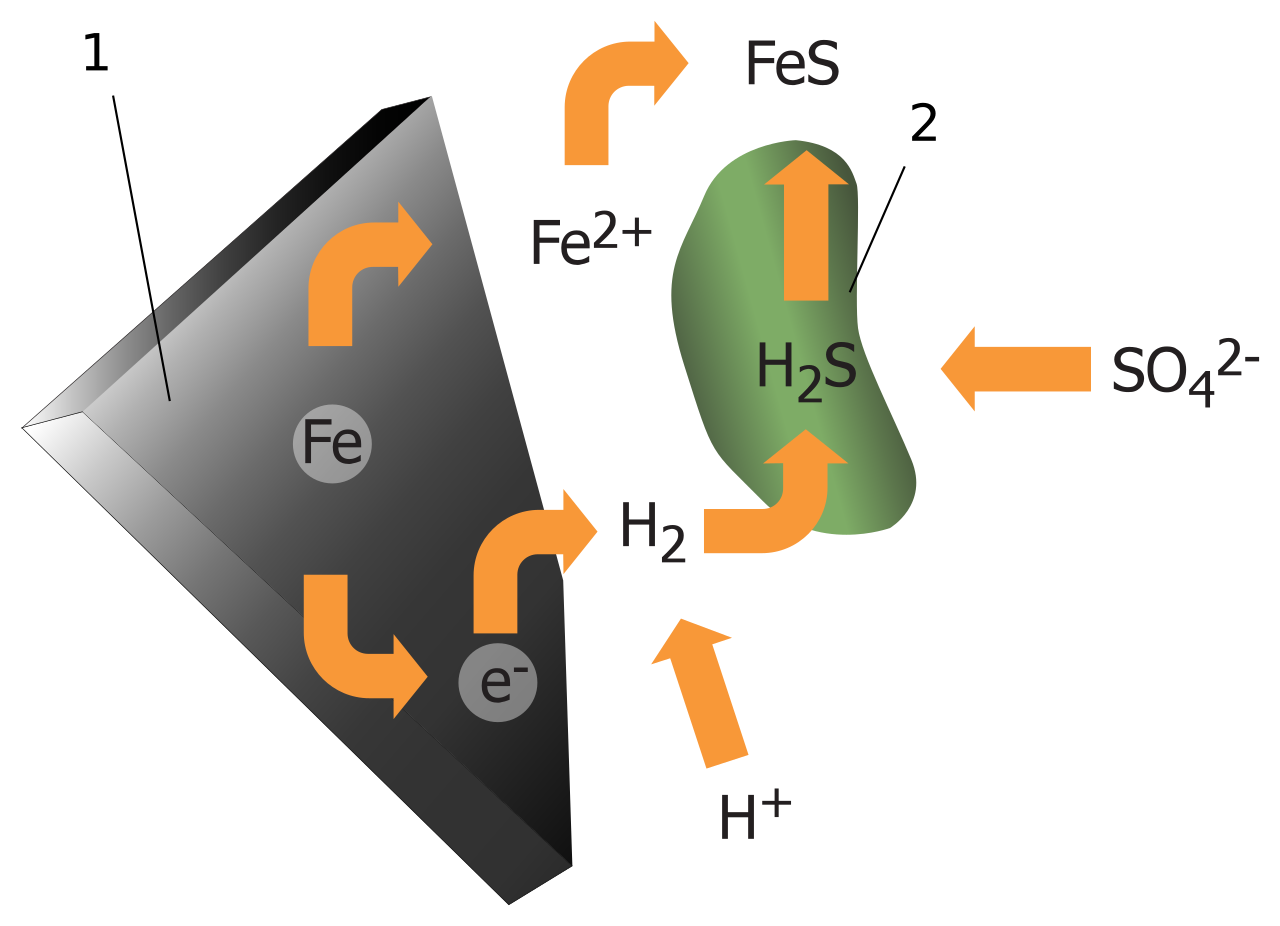
Corrosion is fundamentally an electrochemical event playing out on the surface of a metal. At one microscopic location, oxidation strips electrons from the metal atoms, turning that spot into an anode. Those freed electrons don't stay put; they travel through the bulk of the metal to a neighboring site where oxygen, in the presence of hydrogen ions, gets reduced. That second site functions as a cathode. The hydrogen ions themselves typically arrive via carbonic acid, which forms when atmospheric carbon dioxide dissolves in moisture. Because the whole process is diffusion-controlled, it is confined to exposed surfaces, and the rate depends heavily on what the surface is touching—plain humidity in air is enough to start the cycle, but certain chemicals can accelerate it dramatically. The end products are oxides or salts of the original metal, often producing that unmistakable coloration, like the red-orange patina of rusted iron. The process can eat a deep, localized pit or spread a thin, uniform film across a broad area, and either way it erodes mechanical strength, visual appeal, and the material's ability to block liquids and gases.
When Metals Meet
Galvanic corrosion is what happens when two dissimilar metals touch while sitting in a shared electrolyte, or even when the same metal faces regions of differing electrolyte concentration. In that pairing, the more active metal surrenders electrons to the more noble one, and the active metal corrodes at a sharply accelerated pace while the noble partner barely notices. The relative surface areas of the two metals matter enormously: a small anode paired with a large cathode drives the anode's loss to dangerous speeds. Temperature, humidity, and salinity all shift the rates as well. The marine industry lives with this problem daily, since saltwater is an aggressive electrolyte that constantly bathes hulls, pipes, and structural steel. Engineers combat it with sacrificial anodes—blocks of zinc bolted to a steel hull, for instance, which corrode on the steel's behalf. The underlying hierarchy of which metal will sacrifice itself to which is captured in the galvanic series, a ranking established by measuring the current that flows between paired metals in a standard medium such as aerated seawater at room temperature.
Nature's Armor
Some elements are simply born with corrosion resistance baked into their chemistry. Gold and platinum sit so high in thermodynamic stability that any oxide they might form decomposes back into pure metal on its own, which is why these precious elements are found in metallic form in the Earth's crust and have been treasured for millennia. More everyday base metals cannot rely on that privilege and must be shielded by external means—paint, hot-dip galvanization, cathodic protection, or combinations of all three. A particularly elegant defense is passivation: the spontaneous growth of an ultrathin film, often just ten nanometers thick on aluminum or stainless steel, that acts as a self-healing barrier. Unlike a thick oxide scale that forms during high-temperature heating, a passive film regenerates if it is scratched away. Other metals like zinc, magnesium, and cadmium are thermodynamically eager to corrode but do so at such a glacial kinetic rate that the damage is practically negligible under normal conditions.
Reversing the Damage
Corrosion does not have to be a one-way sentence. In many cases the products of the reaction can be stripped away chemically. A classic example is the application of phosphoric acid, sold as naval jelly, to ferrous tools and surfaces to dissolve away rust. It is important, though, not to confuse this cleaning step with electropolishing, a distinct process that removes a thin layer of the underlying metal itself to produce a mirror-smooth finish; phosphoric acid can electropolish copper, but it does so by eating the copper, not by lifting off copper oxide. Beyond removal, the broader engineering discipline of corrosion control focuses on slowing or stopping the reaction before it starts—reducing the activity of exposed surfaces through passivation treatments or chromate conversion coatings. The stakes are high: once corrosion has degraded a structure's mechanical strength, its appearance, or its permeability to liquids and gases, the consequences can range from cosmetic blemishes to catastrophic structural failure.
Gallery
Frequently Asked Questions
Who is Corrosion?
Corrosion is the natural electrochemical process by which a processed metal reverts to a thermodynamically more stable oxide form. It represents the gradual breakdown of metallic materials through chemical or electrochemical interactions with their surroundings.
What are Corrosion's powers and role?
Its primary mechanism is electrochemical oxidation, in which anodic dissolution of metal atoms is paired with a cathodic reduction reaction at the surface. The most recognizable manifestation is the formation of reddish-brown iron oxide layers commonly called rust.
How does Corrosion's story end?
The process continues until the metal is fully consumed or a protective passive film halts further reaction. Corrosion engineering intervenes by applying coatings, cathodic protection, or alloying to arrest the progression before structural failure occurs.
Why is Corrosion important?
It governs the service lifetime of virtually every metallic structure, from bridges to microelectronics, and drives enormous economic cost worldwide. Understanding the galvanic series and passivation behavior is essential for predicting which metal pairs will accelerate or resist the process.
What is Corrosion's nemesis?
Passivation stands as its chief counter, where a thin, adherent oxide layer self-limits further dissolution of the underlying metal. The entire discipline of corrosion engineering is built around extending that protective barrier or blocking the electrochemical circuit altogether.
More in Electrochemistry And Surface Chemistry 1-18
Spotted an error? Know more?
This is a living reference — every entry is fact-audited, and reader corrections feed straight into our audit queue. Suggest an edit · See this site's audit record