
Galvanic cell
Electrochemical cell generating current from spontaneous redox reactions.

Sumita Roy Dutta · CC BY-SA 4.0
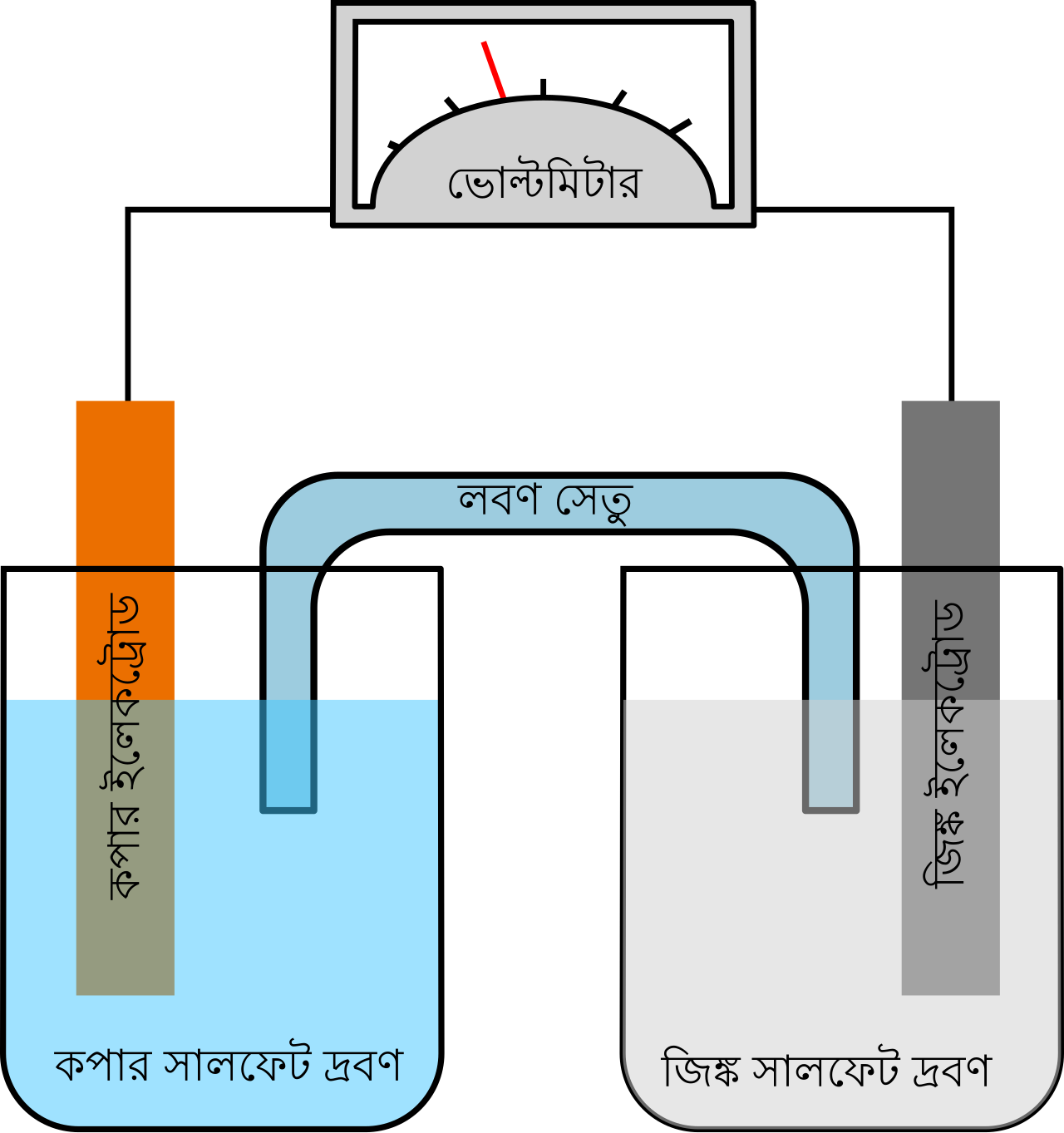
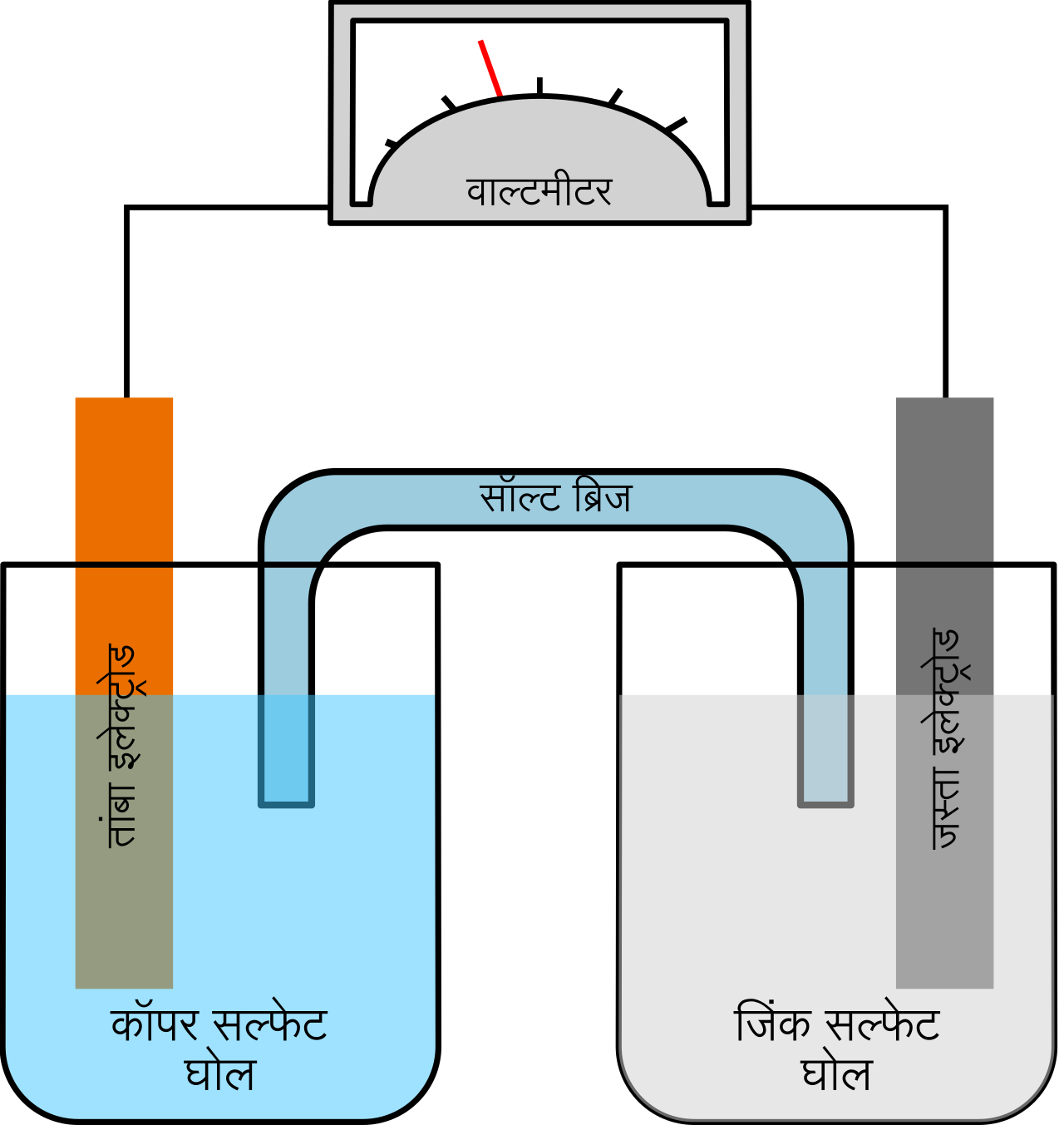
A galvanic cell or voltaic cell, named after Luigi Galvani and Alessandro Volta, is an electrochemical cell that generates an electric current from spontaneous oxidation–reduction reactions. An example consists of two different metals, each immersed in separate beakers containing their respective metal ions in solution, connected by a salt bridge or porous membrane. Volta invented the voltaic pile, the first electrical battery, though common usage of the word battery has evolved to include a single galvanic cell.
- named_after
- Luigi Galvani and Alessandro Volta
- field
- Electrochemistry
- key_discovery
- Electric current from spontaneous redox reactions
- also_known_as
- Voltaic cell
Lore & Background
He called this 'animal electricity.' The frog leg served as both detector and electrolyte. Volta had earlier established the law of capacitance C = Q/V with force-based detectors. Carlo Matteucci later constructed a battery entirely from biological material in response.
Reader's Guide
Galvanic cells are extensions of spontaneous redox reactions, designed to harness the energy produced. For example, when zinc metal is immersed in copper sulfate solution, copper deposits on the zinc and zinc ions enter the solution. In a galvanic cell, the same reaction is carried out in separate half-cells, allowing chemical energy to be converted into electrical energy. The Daniell cell is a specific example, with a zinc half-cell and a copper half-cell connected by a salt bridge. Electrons flow through an external conductor from the anode (where oxidation occurs) to the cathode (where reduction occurs). Although Galvani incorrectly thought the source of electromotive force was in the animal, and Volta incorrectly thought it was in the physical properties of the electrodes, Faraday later correctly identified the source as chemical reactions at the electrode-electrolyte interfaces. The discoveries paved the way for electrical batteries; Volta's cell was named an IEEE Milestone in 1999.
Did You Know?
- Faraday introduced the terms electrode, cathode, anode, electrolyte, ion, cation, and anion.
The Great Debate: Animal Electricity Versus Metal Contact
In 1780, Luigi Galvani observed something startling: when two dissimilar metals—copper and zinc, for instance—were simultaneously touched to different points on a frog's leg, the muscle twitched. Galvani interpreted this as evidence of a vital force he called animal electricity, residing within living tissue. Crucially, the frog's leg was doing double duty in his experiments, serving as both the detector of current and the electrolyte in modern chemical terms. A full decade later, in 1790, Alessandro Volta demonstrated that no animal was required at all; he substituted a force-based detector and brine-soaked paper as the electrolyte. Building on his earlier work establishing the capacitance relationship C = Q/V, Volta then constructed, in 1799, the voltaic pile—a vertical stack of alternating metal disks separated by electrolyte layers. He deliberately used only non-biological materials to refute Galvani's vitalist theory. Carlo Matteucci later countered by assembling a battery from purely biological components. Volta's framework treated each electrode as having an intrinsic electrical character—what we would now term its work function—while overlooking the chemical reactions occurring at the electrode-electrolyte boundary, such as hydrogen gas formation on the more noble metal.
Faraday and the Chemical Truth
For nearly four decades after Volta's pile, the true origin of the electromotive force remained a matter of fierce disagreement. Galvani had located the source in the living animal itself, while Volta attributed it to the inherent physical properties of the metal electrodes in contact. Neither explanation accounted for the chemistry happening at the interface between metal and solution. That changed when Michael Faraday, working roughly forty years after Volta's invention, demonstrated conclusively that the galvanic cell was fundamentally a chemical device. The source of emf, Faraday showed, lay in the oxidation-reduction reactions occurring at the two electrode-electrolyte boundaries. His contribution to scientific language was equally transformative: he coined the terms electrode, cathode, anode, electrolyte, ion, cation, and anion, giving chemists a precise vocabulary to describe what was happening inside the cell. Faraday's laws of electrolysis further cemented the chemical interpretation. Despite Volta's incomplete understanding of his own invention, the voltaic cell was recognized in 1999 as an IEEE Milestone, acknowledging that these early experiments laid the groundwork for every electrical battery that followed.
Harnessing Spontaneous Chemistry: The Redox Engine
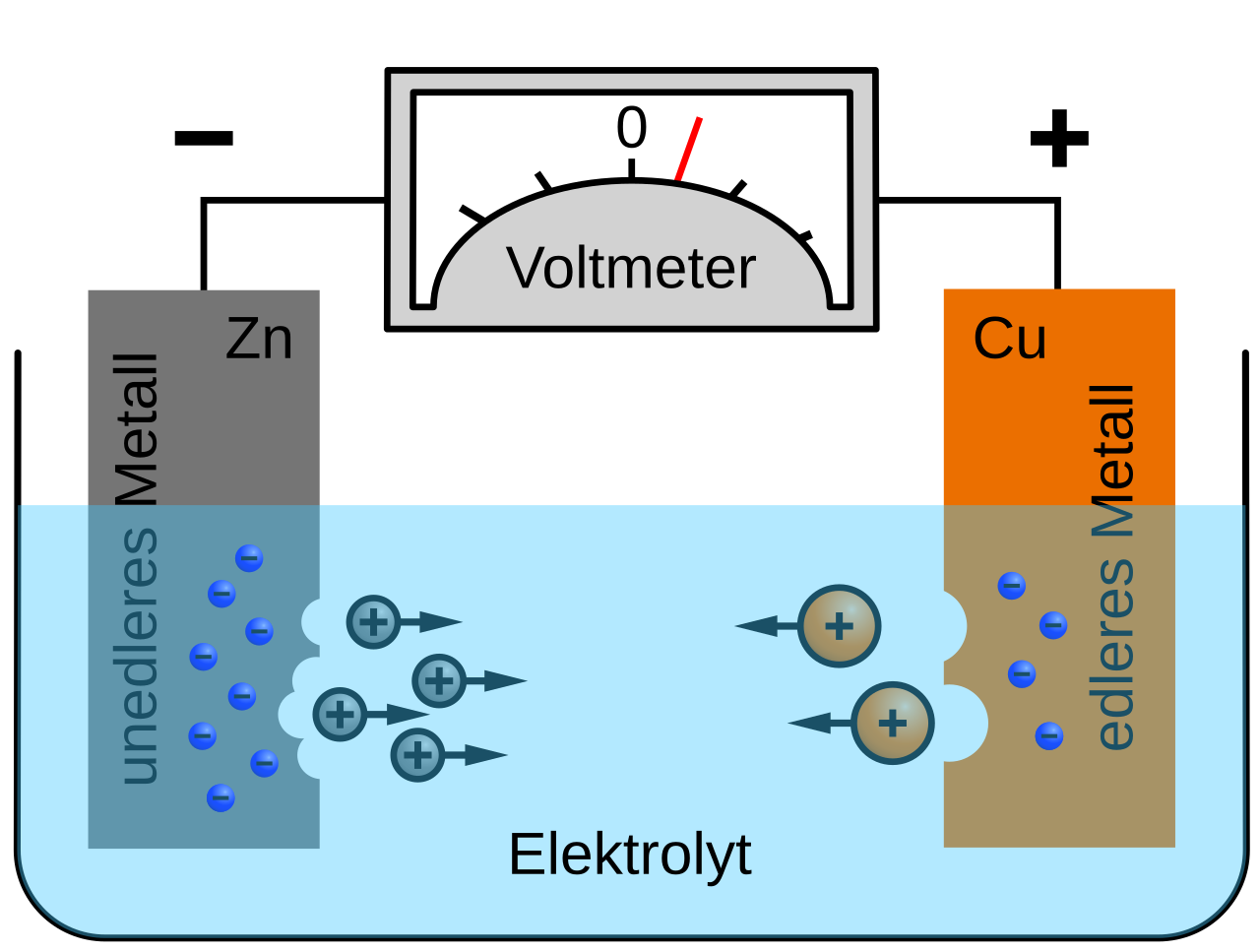
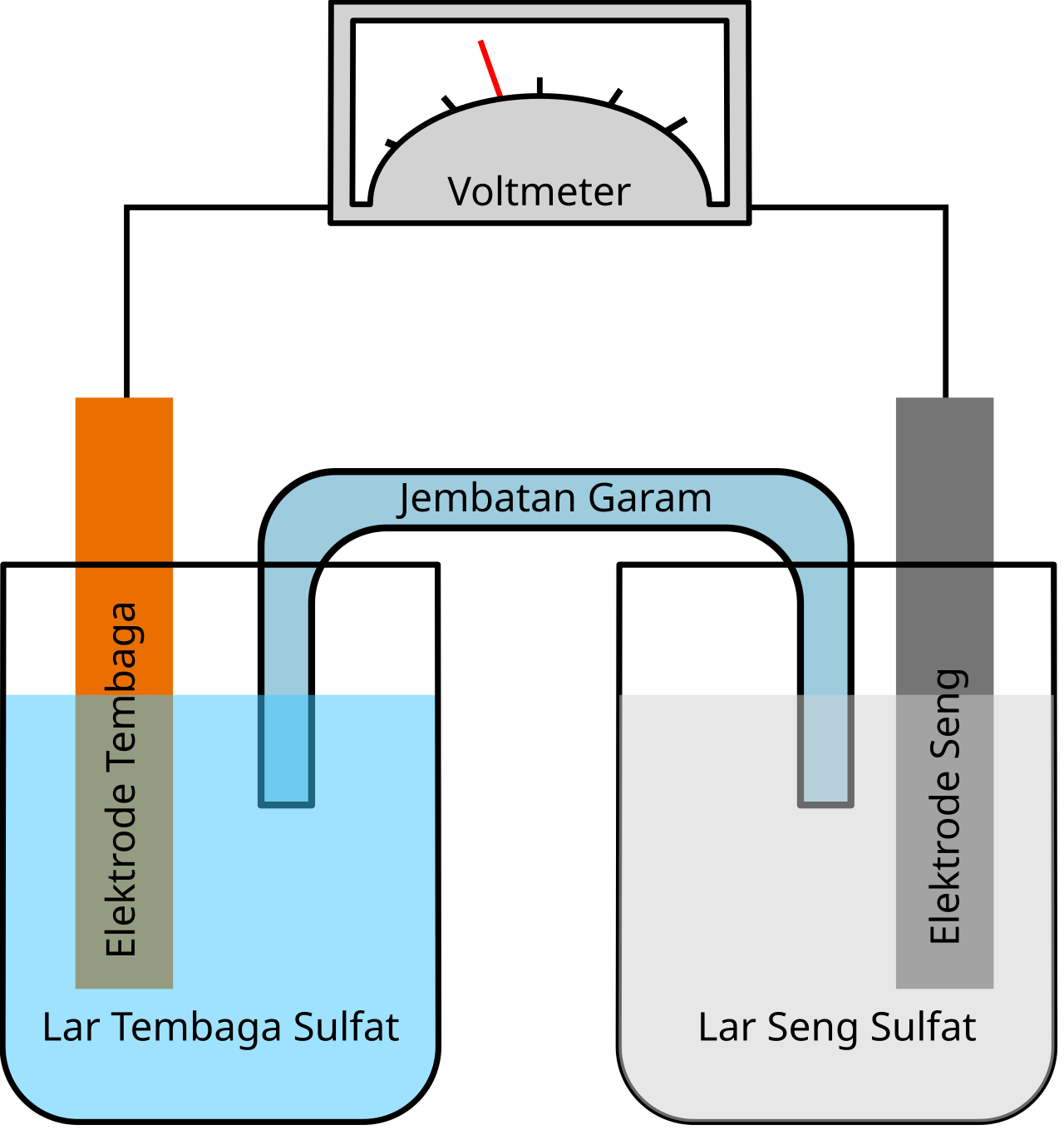
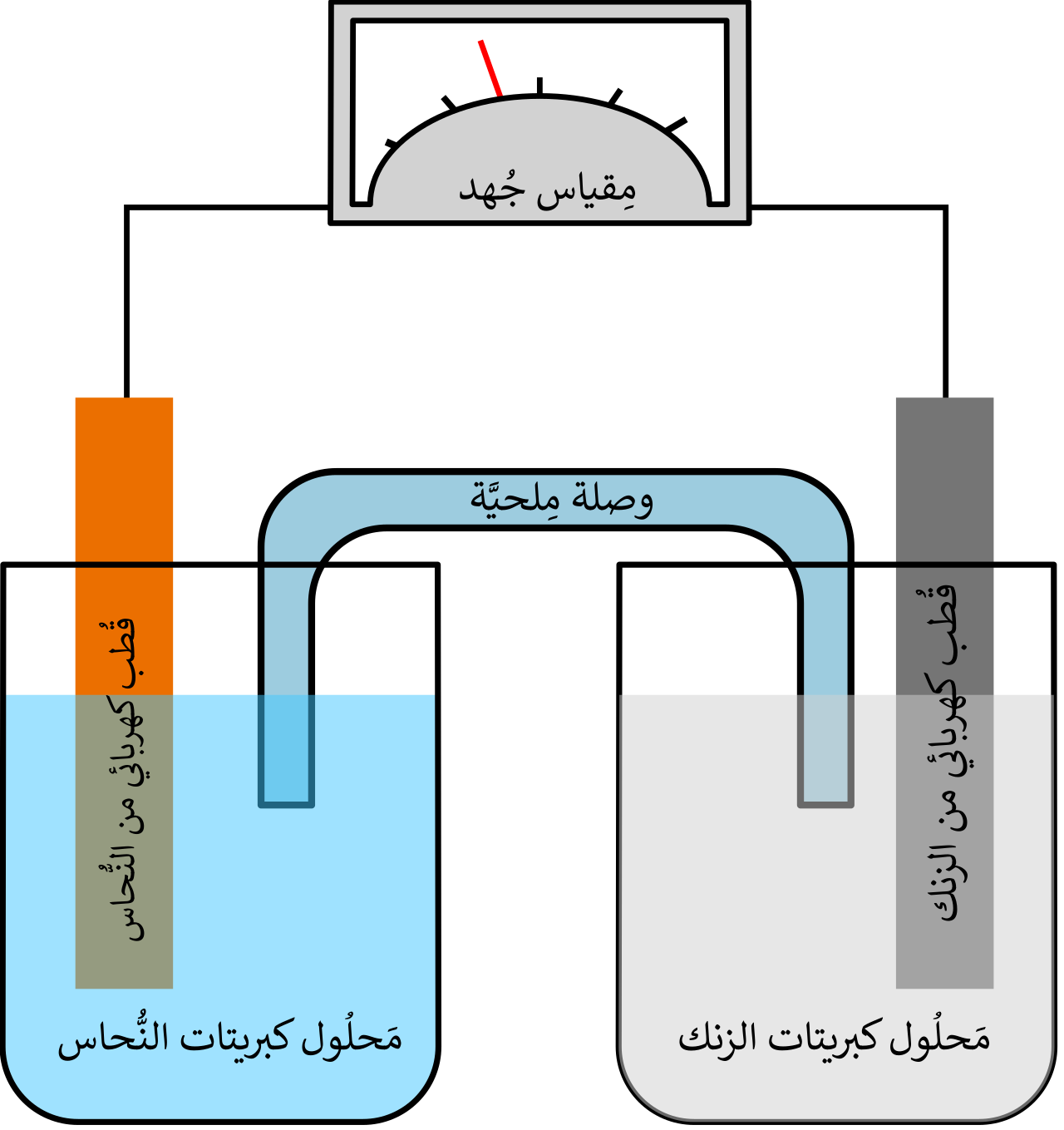
At its core, a galvanic cell is nothing more than a carefully engineered extension of a spontaneous oxidation-reduction reaction, redesigned so that the energy released can be captured as usable electrical work rather than lost as heat. Consider what happens when a zinc strip is dropped into a copper sulfate solution: dark copper metal deposits onto the zinc surface, the characteristic blue tint of Cu²⁺ ions fades from the liquid, and zinc ions appear in solution. If electrons jump directly from zinc to copper ions, the reaction enthalpy dissipates as warmth. A galvanic cell prevents this by separating the two half-reactions into distinct compartments. Each half-cell pairs a solid metal electrode with a solution containing its own cations and charge-balancing anions. The two half-cells are joined by a salt bridge or a porous, semi-permeable membrane, which allows ionic conduction while stopping the more noble metal's ions from migrating to the wrong electrode. The overall electromotive force equals the difference between the two half-cell potentials, a value that depends on both the electrode materials and the electrolyte composition—confirming, as Faraday insisted, that the driving force is chemical in origin.
The Daniell Cell, Conventions, and Ancient Speculation
The Daniell cell remains the textbook illustration of galvanic-cell operation. Its zinc half-cell holds a zinc electrode in zinc sulfate solution, while the copper half-cell pairs a copper electrode with copper sulfate. A salt bridge links the two compartments and completes the ionic circuit. When an external wire connects the electrodes, zinc atoms at the anode dissolve into solution as Zn²⁺, releasing electrons into the conductor. To maintain charge balance, cations migrate out of the zinc compartment through the bridge while sulfate anions drift in. At the copper cathode, Cu²⁺ ions accept those arriving electrons and plate as solid copper onto the electrode. The net reaction—Zn(s) + Cu²⁺(aq) → Zn²⁺(aq) + Cu(s)—is identical to the single-beaker example, but now the electron flow through the external wire constitutes the useful output. Volta's original pile, a stack of such cells, was the first true battery; today the word battery commonly refers to even a single cell. In 1940, Wilhelm König proposed that the Baghdad battery might be an ancient Parthian galvanic cell; replicas filled with citric acid or grape juice do generate a small voltage, yet scholars remain divided, noting the object closely resembles vessels used for storing parchment scrolls.
Gallery
Frequently Asked Questions
Who is Galvanic cell?
A galvanic cell is an electrochemical device that produces an electric current by harnessing spontaneous oxidation–reduction reactions. It carries the names of both Luigi Galvani and Alessandro Volta and is also widely known as a voltaic cell.
What is Galvanic cell's role — what does it actually do?
Its core function is to convert stored chemical energy into usable electrical energy. In a typical setup, two different metals each sit in separate beakers of their own metal-ion solutions, linked by a salt bridge or porous membrane to complete the circuit.
Why is Galvanic cell important to the Electrochemistry canon?
It proved that a continuous electric current could be drawn from purely chemical, spontaneous redox processes rather than from friction or static charge. That single insight became the foundation on which all modern electrochemistry and battery technology was built.
What else is Galvanic cell known by?
The most common alternate name is 'voltaic cell,' honoring Alessandro Volta. In casual usage, people often just call a single galvanic cell a 'battery,' even though the technical definition of a battery is a collection of multiple cells.
More in Electrochemistry And Surface Chemistry 1-18
Spotted an error? Know more?
This is a living reference — every entry is fact-audited, and reader corrections feed straight into our audit queue. Suggest an edit · See this site's audit record